What is Seedance and how does InVideo use it for video generation?
Last updated July 14, 2026
Seedance 2.0 is a video generation model that produces cinematic clips — typically 15 seconds each — with natively generated audio and dialogue, plus reference-to-video and extend features for shot continuity. Inside invideo, the invideo agent routes shots to Seedance 2.0 and attaches your character sheets, style references, and prior clips to every generation automatically.
Seedance 2.0 is a video generation model built for cinematic footage: it generates clips in roughly 15-second chunks, produces audio natively — dialogue, ambience, and sound effects baked into the footage — and handles stylized motion well, including anime-style animation that preserves a traditional two-to-three frame aesthetic. In one documented short, the creator manually added only a single sound effect; every other sound was generated natively inside Seedance 2.0.
Two features define how it handles continuity. Reference-to-video accepts character references, location references, and a full prior video clip simultaneously, so the model carries camera movement, framing, and atmosphere from the end of one segment into the next — something start-frame/end-frame methods cannot do, because they hold no context beyond the single uploaded frame. Extend continues an existing clip and generates overlapping frames on either side of the join, giving you an editing buffer; reliable motion begins at the third frame, and the extension matches the source clip's color and lighting at roughly 99% accuracy, leaving only minor curve corrections in your edit.
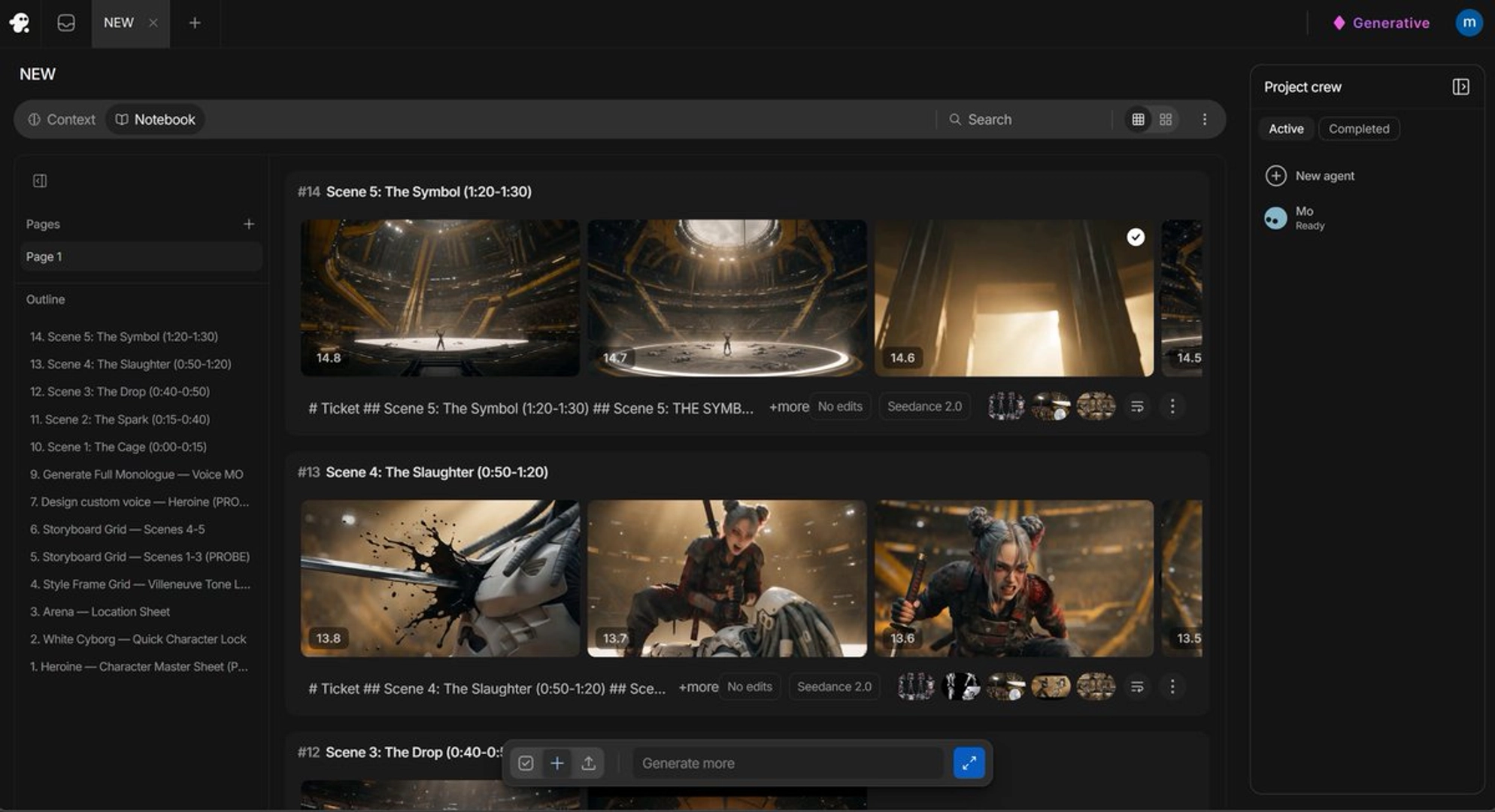
Inside invideo, Seedance 2.0 is one of the video models the platform carries alongside Veo and Kling — the invideo agent routes each shot to the model that fits it, so you never manage model access separately. For Seedance 2.0 specifically, the working order is frames-first: lock your character sheets and style references as approved images, and the invideo agent attaches those references plus your saved style block to every Seedance 2.0 generation prompt. Run it in Always Ask mode and you approve each prompt and its attached references before any credits are spent. For continuous takes, clip the end of a generated segment, re-upload it, and the invideo agent feeds it into Seedance 2.0 reference-to-video alongside your character and location references to continue the sequence as one seamless shot.
One prompting specific matters for dialogue: give Seedance 2.0 the line and the scene context, not second-by-second timestamps — timestamped prompts cause the model to invent whispered filler lines to fill dead time, wasting credits.
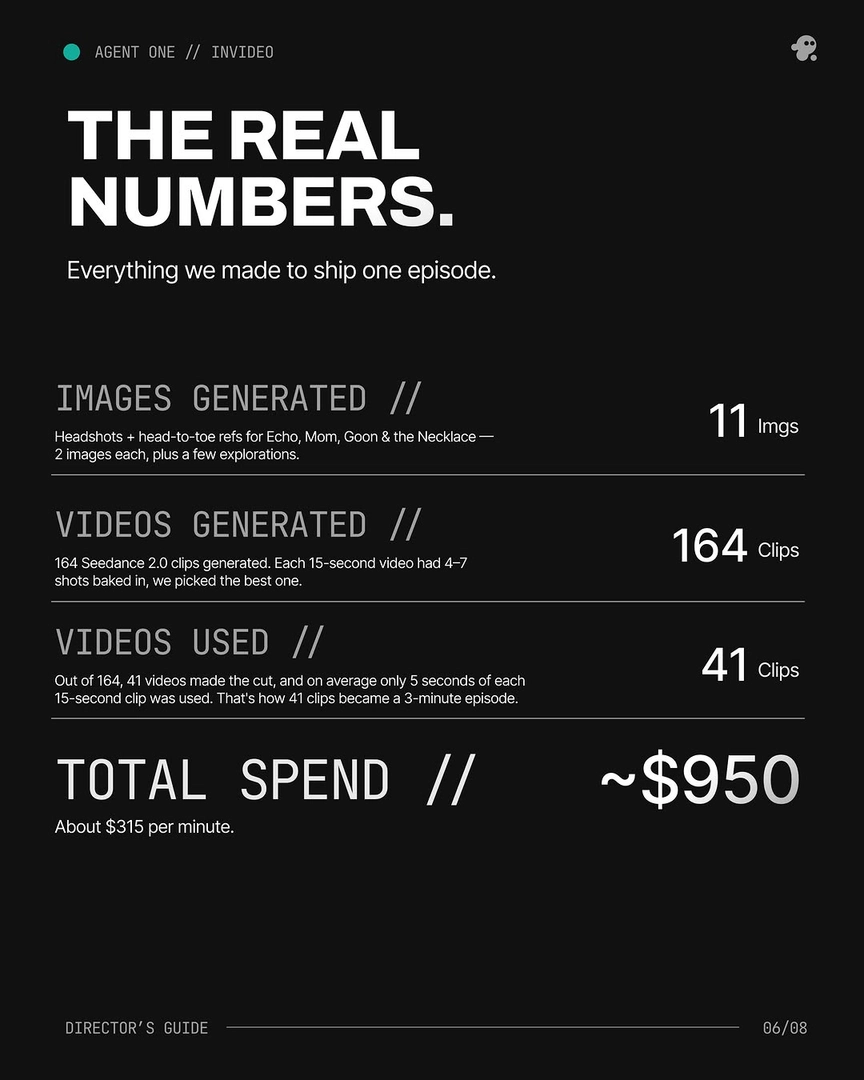
The documented production math: one 2-person team generated 164 Seedance 2.0 clips in 15-second chunks for a 3-minute animated episode; 41 made the final cut — a ~25% selection rate, averaging 5 usable seconds per clip — at ~$950 total, or $315 per finished minute, over 2 days with no pre-production. Plan for roughly 3 generations per usable shot and treat overgeneration as a deliberate budget line, since each 15-second clip typically contains 4–7 usable shot candidates you select between.
One platform note: Seedance 2.0 runs entirely in the browser on invideo — no local GPU or node-based setup required — and invideo's content policy permits filmmaker-grade dramatic content within its guardrails, which is part of why serious narrative work gets produced on it.
Watch some of these to see what works for you:
What I especially love about Seedance is how well it handles anime-inspired movement, producing clean HD animations while maintaining that stylized 2-3 frame aesthetic that gives the series its traditional feel.
— a filmmaker producing an AI-animated series with Seedance 2.0